
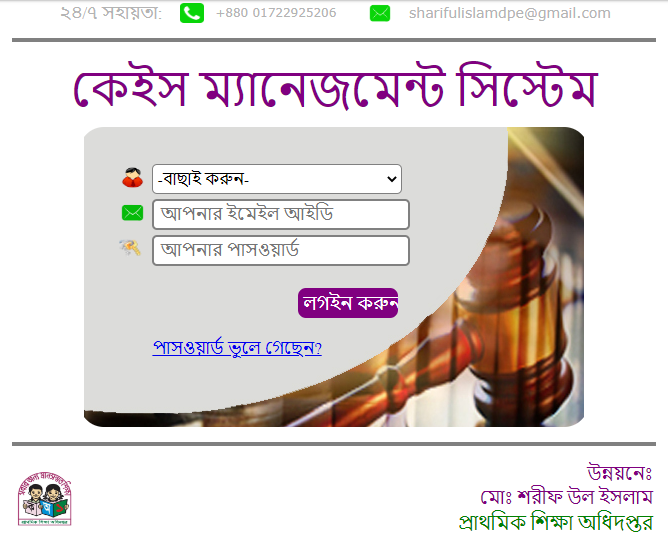
Government of the People’s Republic of Bangladesh, Ministry of Primary and Mass Education.
The Case Management System is a digital initiative designed to improve record-keeping, case tracking, communication, and administrative workflow. It helps departments manage official matters in a more organized way by allowing responsible users to register cases, monitor progress, update records, and review information from one structured platform.
In many government and administrative offices, case handling often depends on paper files, manual notes, and multiple layers of communication. This can create delays, missing records, repeated follow-ups, and difficulty in tracking the actual status of a case. A digital case management system solves these problems by making the full process easier to monitor and manage.
Project Overview
This Case Management System was developed by Md. Sharif Ul Islam from the Department of Primary Education. The project is connected with the administrative goals of the Government of the People’s Republic of Bangladesh under the Ministry of Primary and Mass Education.
The system is designed to support better administrative management by replacing scattered manual processes with a more reliable digital structure. It gives officials a centralized place to store case details, search records, update progress, and generate useful information for decision-making.
Purpose of the Case Management System
The main purpose of the Case Management System is to make case handling faster, clearer, and more transparent. It supports offices that manage official requests, complaints, investigations, administrative matters, employee issues, school-level concerns, or service-related cases.
Instead of relying only on physical documents, the system allows users to manage each stage of a case digitally. From registration to final resolution, every important detail can be recorded and tracked in a more disciplined way.
Why a Digital Case Management System Is Important
A digital case management system is important because administrative work requires accuracy, accountability, and timely action. When files are handled manually, it becomes difficult to know where a case stands, who is responsible for the next step, and whether any action has been delayed.
With a digital system, officials can quickly access information and reduce unnecessary paperwork. It also helps departments maintain a proper history of actions, remarks, updates, and final decisions for future reference.
Key Objectives of the System
The Case Management System has several important objectives that support better administration and service delivery. These objectives focus on improving transparency, reducing manual work, and making official records easier to manage.
- To digitize case records and reduce dependency on paper files.
- To track the current status of each case in real time.
- To improve transparency in administrative case handling.
- To help officials access case information quickly and accurately.
- To maintain organized records for reporting and decision-making.
- To support faster communication between relevant departments.
- To reduce delays caused by missing files or unclear responsibility.
- To create a more accountable workflow for case resolution.
Main Features of the Case Management System
A strong case management platform should support the full lifecycle of a case. This includes registration, review, assignment, tracking, updates, reporting, and final closure.
The Case Management System developed for administrative use includes features that help officials manage these steps more efficiently. Each feature is designed to reduce confusion and make case handling more reliable.
The case registration feature allows users to enter new cases into the system with all necessary details. These may include case title, date, department, applicant information, case type, reference number, responsible officer, and current status.
A proper registration process ensures that every case begins with accurate information. This reduces the chance of missing records and makes it easier to search, review, or follow up on any case later.
2. Case Tracking
Case tracking is one of the most useful features of the system. It allows officials to monitor the progress of each case from submission to completion.
With tracking tools, departments can identify pending cases, delayed actions, completed files, and cases that need urgent attention. This helps improve response time and ensures that cases do not remain unnoticed.
3. Digital Record Management
Digital record management helps store all case-related information in one organized system. This can include case details, attached documents, remarks, decisions, updates, and supporting evidence.
By storing information digitally, the department can reduce the risk of lost files, damaged documents, and repeated manual searches. It also makes old records easier to retrieve whenever needed.
4. Status Updates
Authorized users can update the status of a case as it moves through different stages. For example, a case may be marked as submitted, under review, pending, forwarded, resolved, or closed.
Status updates make the workflow more transparent. They help officials understand what action has already been taken and what still needs to be completed.
5. Remarks and Action History
A useful case management system should allow authorized users to add remarks and record important actions. This creates a clear timeline of what happened during the handling of a case.
Action history is especially helpful when multiple officials or departments are involved. It reduces confusion and provides a proper reference if a case needs to be reviewed later.
6. Document Upload and Storage
Administrative cases often require supporting documents. A digital system can allow users to upload relevant files such as applications, letters, evidence, reports, approvals, or official notices.
This feature keeps all related materials connected with the case record. It saves time and makes the review process more efficient.
7. Reporting and Monitoring
The reporting feature helps management review overall case performance. Reports may include pending cases, resolved cases, department-wise summaries, officer-wise workload, case categories, and delay patterns.
These reports can support better planning and decision-making. They also help senior officials understand where improvements are needed in the administrative process.
Benefits of the Case Management System
The Case Management System offers several benefits for government offices, education departments, and administrative teams. It improves efficiency by reducing manual work and ensuring that every case is properly recorded and followed up.
The system also supports better transparency because case progress can be monitored more clearly. Officials can see updates, identify pending tasks, and take action before delays become serious.
Improved Efficiency
Efficiency improves when officials no longer need to search through physical files or depend on repeated verbal follow-ups. A centralized system gives users faster access to important case details.
This saves time for both officers and applicants. It also allows departments to handle a larger number of cases with better organization.
Better Transparency
Transparency is one of the main advantages of digital administration. When every update is recorded, it becomes easier to understand the exact status of a case.
This helps reduce uncertainty and builds trust in the administrative process. It also makes it easier for management to review performance and identify delays.
Reduced Paperwork
Manual paperwork can slow down official processes and increase the risk of misplaced documents. A digital system reduces dependency on paper files by storing information electronically.
This makes record management cleaner and more sustainable. It also helps departments save physical storage space and reduce printing costs.
Easy Access to Information
With digital records, authorized officials can search and review case information quickly. This is especially useful when old records need to be checked or when a case has been transferred between departments.
Easy access improves decision-making because officials can review accurate information before taking action. It also reduces delays caused by missing or incomplete files.
Stronger Accountability
Accountability improves when every action, update, and remark is recorded inside the system. Officials can see who handled a case, what action was taken, and when it was completed.
This creates a more responsible workflow. It also helps management identify bottlenecks and improve internal performance.
Importance for the Department of Primary Education
For the Department of Primary Education, a Case Management System can play an important role in managing administrative issues, school-level concerns, employee-related matters, official requests, and internal case records.
Education departments often handle a wide range of cases involving teachers, staff, students, guardians, schools, and local offices. A well-managed digital system can help organize these matters and improve service quality.
Supporting Better Governance in Education
Good governance in the education sector requires timely action, accurate documentation, and transparent communication. A digital case system helps achieve these goals by creating a structured method for case handling.
When education-related offices can manage records properly, they are better able to support teachers, institutions, and communities. This contributes to smoother administration and stronger public service delivery.
Reducing Delays in Administrative Work
Administrative delays can affect service quality and public trust. When a case is delayed because of missing documents or unclear responsibility, it can create frustration for applicants and additional pressure on officials.
A case management system helps reduce these delays by making every case visible and trackable. Officials can quickly see what is pending and take action according to priority.
Improving Communication Between Departments
Many cases require input from more than one department or officer. Without a proper communication system, information can become scattered or delayed.
A digital case management platform helps departments communicate more effectively by keeping updates and documents in one place. This reduces confusion and supports faster decision-making.
Role in Digital Transformation
The Case Management System reflects the growing importance of digital transformation in public administration. Governments and public institutions around the world are moving toward digital platforms to improve efficiency and service delivery.
By adopting digital tools, departments can modernize their internal processes and provide better support to the people they serve. This is especially important in sectors like education, where administrative work affects schools, teachers, students, and families.
Data Security and Authorized Access
Administrative case records may contain sensitive information. Therefore, a case management system should include proper user access controls to ensure that only authorized officials can view, update, or manage records.
Secure access helps protect personal information and official documents. It also ensures that case data is handled responsibly and professionally.
Better Reporting for Management Decisions
Reports generated from the system can help senior officials understand workload, performance, and case trends. This information is useful for planning resources and improving administrative procedures.
For example, if many cases are delayed in one category, management can investigate the reason and take corrective action. This helps create a more responsive and efficient department.
Future Potential of the Case Management System
A case management system can continue to improve over time. Future upgrades may include automated notifications, applicant tracking options, mobile access, dashboard analytics, document verification, and integration with other government platforms.
These improvements can make the system even more useful for public administration. As digital governance develops, such systems can become essential tools for modern departments.
Digital Platforms and the Value of Organized Information
A Case Management System is useful because it turns scattered administrative details into structured and searchable information. The same principle applies to public-facing digital platforms, where clear organization helps readers find what they need without wasting time. Dubai Web is a good example of how information can be arranged into practical guides that help users understand everyday topics more easily.
In public administration, information becomes valuable only when it is easy to locate, understand, and use. This is also true for city-focused websites that explain services, places, and lifestyle topics for online readers. Dubai Insights shows how structured digital content can guide users through location-based information in a simpler and more useful way.
A strong case system supports better communication between departments, while a strong content platform supports better communication with the public. Both depend on clarity, relevance, and proper organization. Khaleej Day reflects this approach by publishing regional guides and updates that help readers access information in a more readable format.
Digital transformation is not limited to government offices. It also includes travel, service, lifestyle, and community platforms that help people make informed decisions. Emirates Inside is one such platform where users can explore travel-related and regional information presented in a straightforward way.
When people search online, they often want quick access to useful updates without reading confusing or poorly arranged information. That is why digital platforms with a clear editorial structure are important. Gulf Update 24 provides a news-style format that helps readers browse different topics from one place.
Service-Based Platforms and Practical Online Tools
Just as a Case Management System helps officials complete administrative tasks more efficiently, online tools help users complete personal calculations and service-related checks with less effort. Gratuity Calculator is an example of a focused digital tool that helps users estimate employment-related benefits through a simple online process.
Public service becomes more convenient when users can access information without visiting multiple offices or searching through complicated pages. Transport-related information is a good example because users often need quick answers before traveling. RTA NOL Card Check provides a practical way for users to understand NOL card balance-related information in Dubai.
A well-designed digital platform should reduce confusion and guide users toward the information they need. This is especially important for service categories where people may feel uncertain about requirements or next steps. ID Visa Center presents visa-related guidance in a more organized format, making it easier for users to understand service information.
Conclusion
The Case Management System developed by Md. Sharif Ul Islam from the Department of Primary Education is a valuable step toward digital administration. It helps improve case registration, tracking, record management, reporting, communication, and accountability within the organization.
By adopting a structured digital approach, government departments can reduce delays, improve transparency, and provide better administrative support. This type of system shows how digital transformation can strengthen public service management and create more efficient workflows for the future.
FAQs
What is a Case Management System?
A Case Management System is a digital platform used to register, track, update, store, and manage official cases or administrative records in a structured way.
Who developed this Case Management System?
This Case Management System was developed by Md. Sharif Ul Islam from the Department of Primary Education.
What is the main purpose of the Case Management System?
The main purpose is to make case handling easier, faster, more transparent, and better organized by replacing manual processes with a digital record and tracking system.
How does the system improve administrative work?
It improves administrative work by reducing paperwork, making records easier to access, tracking case progress, supporting communication, and helping officials monitor pending and completed cases.
Why is the system important for the education sector?
The system is important for the education sector because it can help manage school-level complaints, employee matters, official requests, administrative issues, and internal case records more effectively.